

Imagine this:
Your automation system is no longer tied to hardware cycles, control cabinet space, or fixed CPU limits. Control logic becomes elastic, scalable, and deployable wherever it makes the most sense. This is exactly where the Virtual PLC changes the rules of industrial automation.
Industrial environments are evolving rapidly. Machines generate more data, production systems must adapt faster, and intelligent applications are becoming a key competitive factor. Traditional controller concepts are reaching their limits, especially when modern requirements such as flexibility, scalability, and intelligence come into play. The answer lies in rethinking control architectures from a software perspective.
Why virtualization now?
Industrial automation is undergoing a fundamental shift. Increasing complexity, rising data volumes, and the growing importance of AI in industrial automation demand architectures that can scale dynamically and integrate seamlessly with modern IT systems. This is where PLC virtualization moves from an experimental idea to a practical necessity.
Virtualization does more than relocate control logic from hardware to software. It transforms how automation systems are designed, deployed, and maintained. Control applications can be updated independently of physical devices, computing resources can be allocated on demand, and automation becomes part of a larger digital ecosystem. This evolution is a key enabler of true IT/OT convergence, allowing operational technology and IT infrastructures to work hand in hand.
Software-defined control as an architectural principle
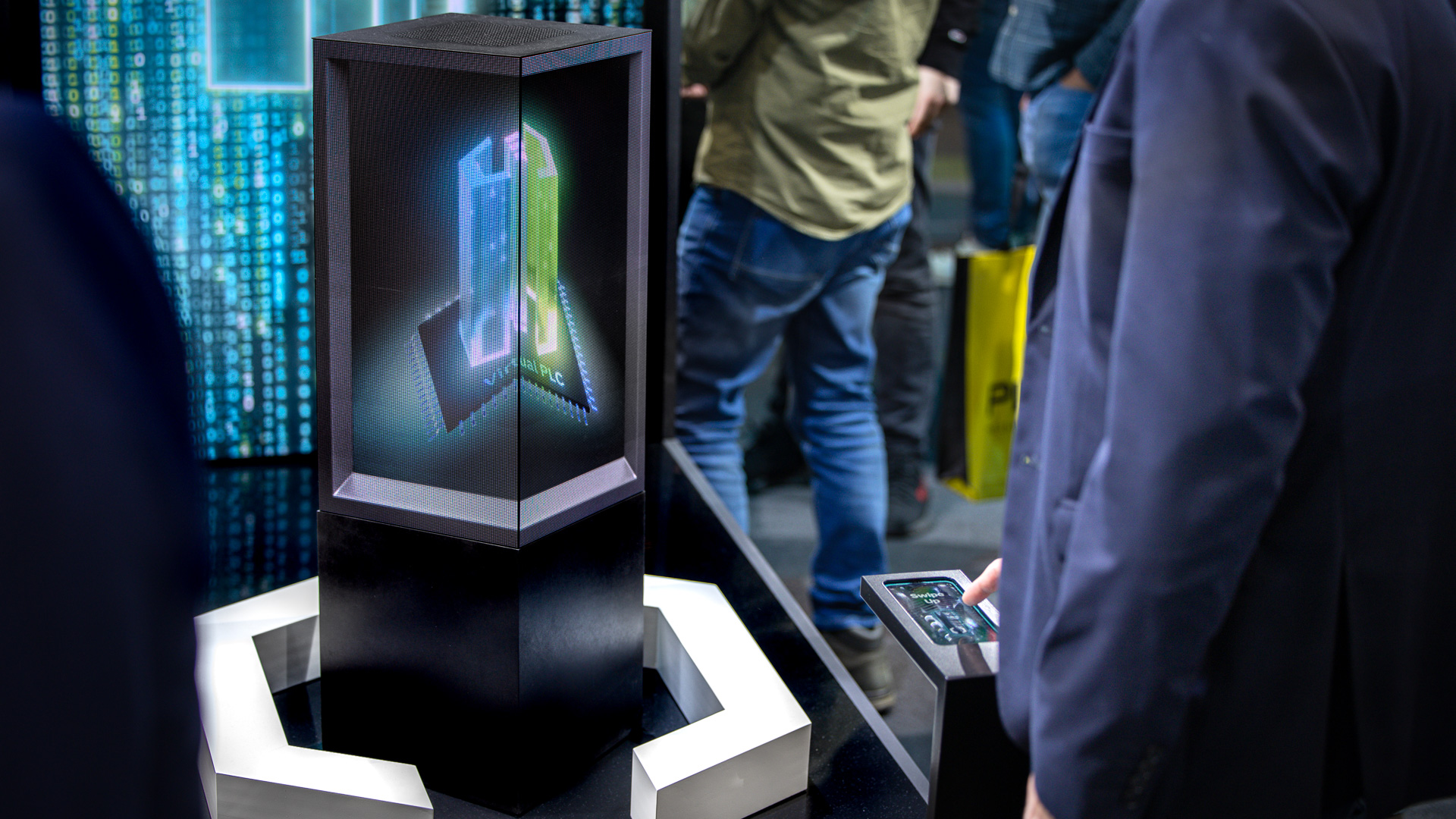
A Virtual PLC is not just a different form factor for a controller. It represents a new architectural mindset based on software-defined automation. Control logic becomes a portable, modular software component that can run on industrial PCs, edge devices, or servers, depending on the application requirements.
This approach removes traditional constraints and opens up new design options. Engineers can decouple performance from hardware lifecycles, scale applications without redesigning control cabinets, and integrate automation systems more deeply into modern digital workflows. As a result, automation architectures become more resilient, adaptable, and future-proof.
Why AI belongs close to control logic
For years, automation and artificial intelligence lived in separate worlds. PLCs handled deterministic control tasks, while AI applications ran on external servers or cloud platforms. This separation introduced latency, complexity, and additional integration effort. By bringing intelligence closer to the control layer, the Virtual PLC enables a new class of applications.
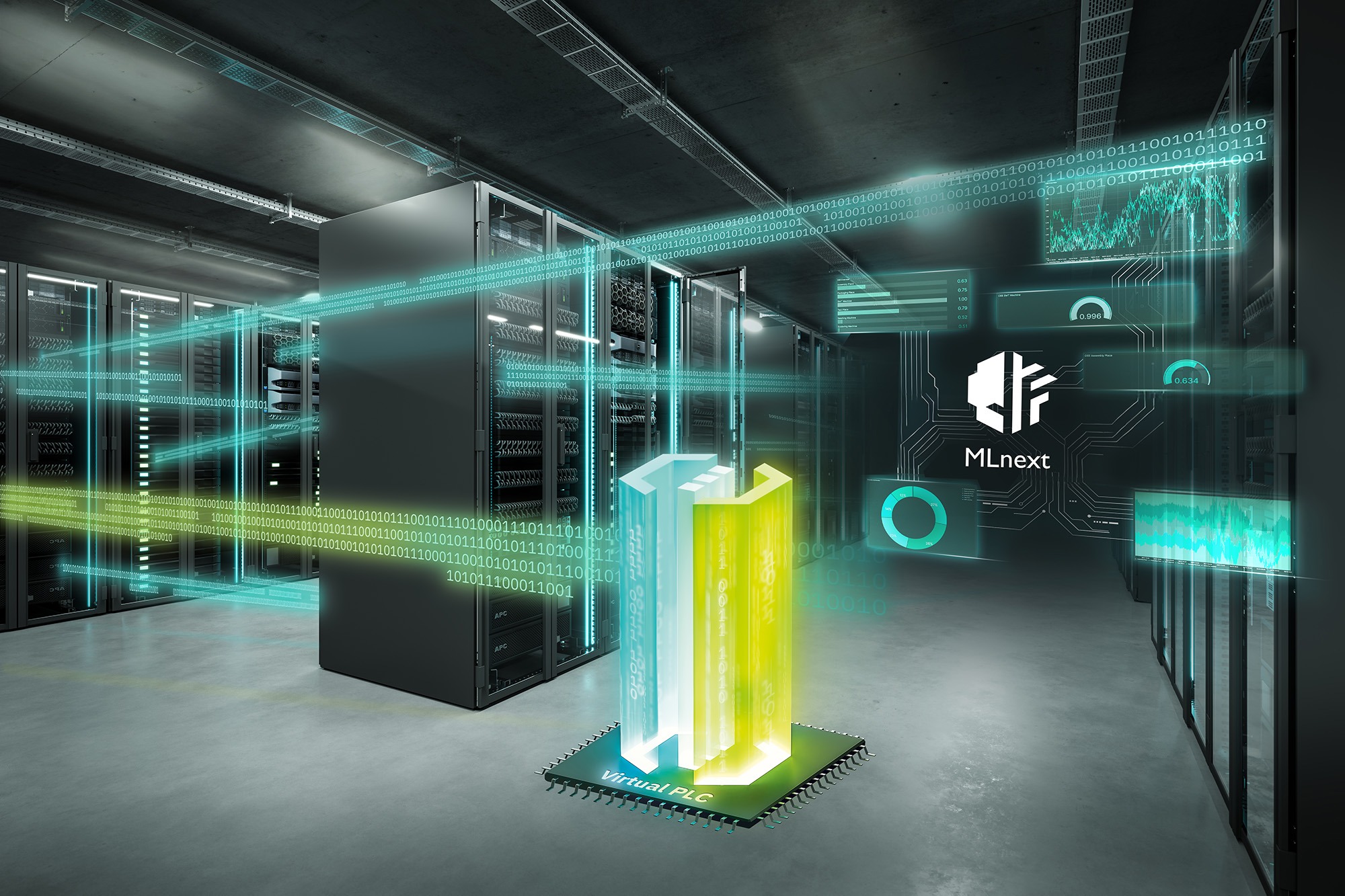
When AI inference runs alongside real-time control, data no longer needs to be transferred across system boundaries. Decisions can be made faster, reactions become more precise, and systems gain the ability to learn and adapt in real time. This concept is often referred to as an Edge AI PLC, where intelligence is executed exactly where the data is generated and where immediate action is required.
This architecture unlocks new possibilities for intelligent automation.
Use Case 1: High-speed quality control
A production machine must analyze large data streams and detect deviations in well under 100 milliseconds. Traditional controller hardware often cannot provide sufficient compute power for real-time AI inference without additional external systems.
In a virtualized environment, data processing happens directly on an industrial PC or server. AI models analyze process data in real time, while the control logic reacts immediately to the results.
Result: Real-time quality inspection without slowing down the machine – enabled by a Virtual PLC architecture that combines performance and determinism.
Use Case 2: One robot, one instance – or ten
In robotic applications, scalability is a recurring challenge. When multiple robots are involved, each system typically requires its own dedicated controller hardware.
With virtualization, multiple isolated controller instances can run on a single powerful server. Each robot receives dedicated CPU and memory resources, optional AI-based analysis, and a unified system architecture.
This approach enables highly scalable robotic environments with minimal hardware overhead and simplified system management.
Use Case 3: Predictive maintenance with integrated AI
Predictive maintenance requires both deterministic control behavior and access to significant compute resources for data-driven models. On physical hardware, combining both aspects is often difficult.
In a virtualized controller environment, relevant sensor data such as temperature, vibration, or current is continuously analyzed by AI models. Anomalies are detected early, and the control logic reacts instantly based on the results. This significantly improves equipment availability, reduces unplanned downtime, and increases overall efficiency – another strong example of how the Virtual PLC enables intelligent automation use cases.
From architecture to implementation
These concepts are implemented in practice with solutions such as Virtual PLCnext Control, which provides real-time control capabilities as a containerized software component. In combination with MLnext, AI models can be created, deployed, and executed directly alongside the control logic.
Developers benefit from multi-programming-language support, container-based deployment, and seamless integration of open-source tools. Businesses gain faster deployment cycles, simplified lifecycle management, and a future-proof automation architecture.
Intel meets Virtual PLCnext Control : Performance that scales with your Ideas
Did you know that we are working closely with Intel on new solutions for industrial automation?
The latest Intel processor technology provides the high performance needed to run our Virtual PLCnext Control reliably. Especially when combined with MLnext on the same device. This collaboration opens the door to even more powerful virtual control systems and new possibilities for AI‑driven Industrial Edge Computing. More details coming soon, So stay tuned.
Why Businesses love it
- More flexible deployment – scalable with Phoenix Contact hardware or via virtualization
- Simplified lifecycle management – update containers, not control cabinets
- Rapid deployment – from weeks to minutes
- Modern IT integration – compatible with DevOps and CI pipelines
- Future-proof architecture – ready for cloud, edge, AI and beyond
This aligns perfectly with current market trends toward open, software-defined automation.
How to get started
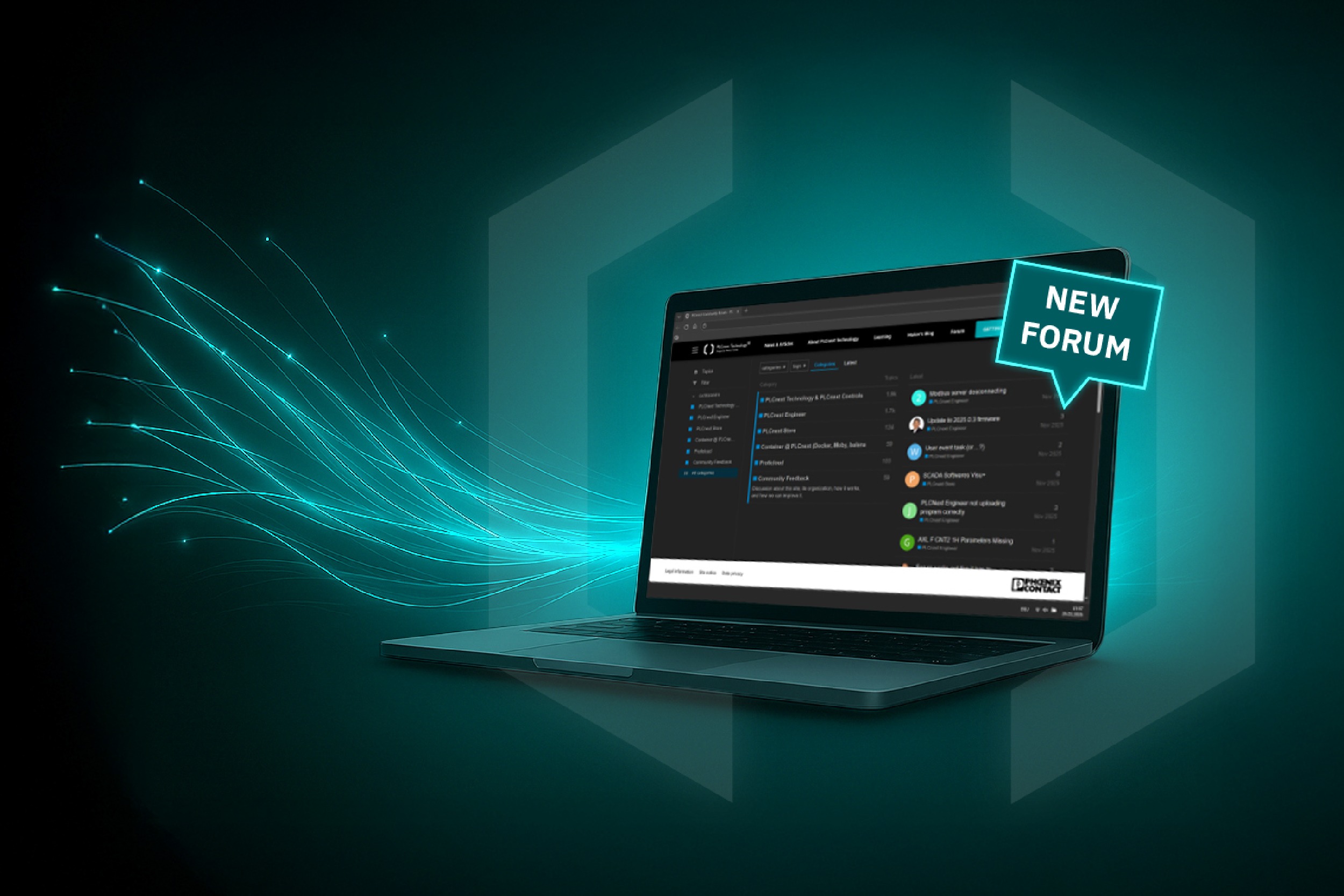
If you’re new to virtualization, the PLCnext Community provides helpful introductions – including the Launch Virtual PLCnext Control article.
A simple starting point:
- choose your platform (IPC, edge or server)
- deploy the Virtual PLCnext Control container
- connect physical or virtual I/O
- create and add your MLnext model
- iterate fast – scale instantly
Conclusion – One platform for automation and artificial intelligence
Virtualization is more than a new deployment model.
It is a new architectural mindset for automation systems and a key enabler of PLC virtualization in industrial environments:
- more flexible
- more scalable
- more intelligent
- more open
Virtualization is more than a new deployment model. It marks a fundamental shift in how modern automation systems are built, maintained, and scaled. By decoupling control logic from dedicated hardware and running it as a software-defined component, engineers gain an unprecedented level of flexibility. This approach reflects the core principles of software-defined automation, where functionality can evolve independently of physical constraints. Tasks that once required complex hardware planning or capacity upgrades can now be solved with a few clicks, a new container instance, or additional compute resources on an existing device.
At the same time, bringing MLnext into the very same execution environment elevates automation from reactive to predictive. Instead of merely processing signals and reacting to events, systems can learn from data, detect anomalies early, and adapt in real time. This is a decisive step for AI in industrial automation, especially when intelligence is executed close to the machine in the form of an Edge AI PLC. This convergence enables architectures that grow with every new requirement while strengthening IT/OT convergence. Architectures that mirror the agility of modern IT infrastructures while preserving the determinism and reliability that industrial environments demand.
Beyond the technical possibilities, this shift also represents a cultural transformation: developers, automation experts, data scientists, and IT teams can now collaborate on a shared platform. With PLCnext Technology’s open ecosystem, multi-programming-language support, community-driven knowledge, and scalable deployment models, innovation becomes a team sport. Everyone can contribute – and everyone benefits.
For machine builders, system integrators, and production teams, this means shorter development cycles, simpler updates, and solutions that are both future-proof and cost-efficient. For innovation leaders, it creates a playground where AI, edge computing, and automation merge into something greater than the sum of their parts.
Virtual PLCnext Control combined with MLnext is more than a technological pairing. It is the foundation for the next generation of intelligent automation. And this is only the beginning.
If you need more information and Join the PLCnext Community to explore more.
Further information
If you would like to learn more about this topic, feel free to visit the Phoenix Contact pages for Virtual PLCnext Control and MLnext to explore additional details and insights. Feel invited to follow our PLCnext Community or read our blog post on “Integrating Artificial Intelligence on the shop floor with MLnext Creation.”

