


Energy data is a key component of modern production environments. It helps identify peak loads, understand energy flows and reveal optimization potential. To ensure energy data can be reliably analyzed, it must follow a clear path, from measurement through control to visualization in energy management systems.
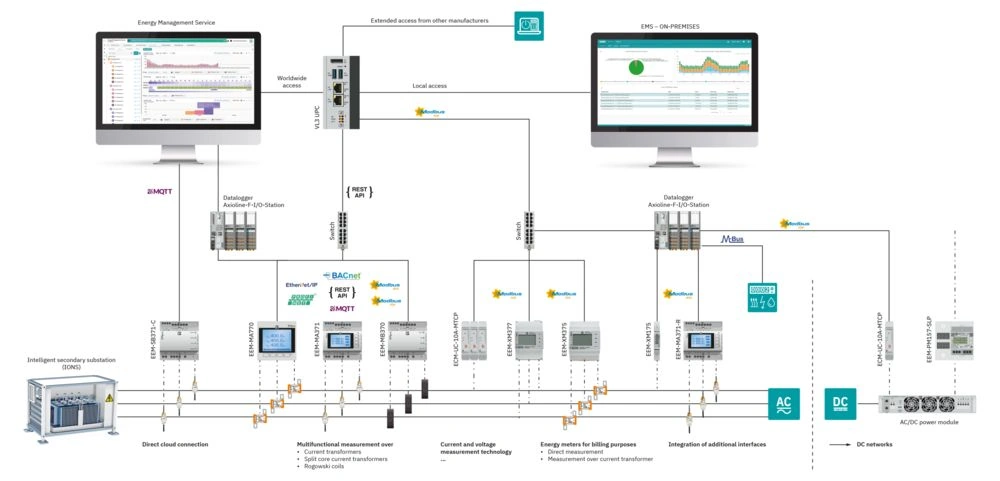
This article describes this path and shows how energy meters, PLCnext Control and edge devices bring together energy data from different sources and transform it into a consistent data model.
1. Starting Point: Measuring Electrical Current
In production plants, electrical current is measured at many points, in machines, sub-distribution systems or directly at individual loads. Current transformers and Rogowski coils measure currents across a wide range, from a few amperes up to several thousand.
These measurement points generate raw data that forms the basis of all subsequent energy data. On its own this data is not yet meaningful, but it already contains all the information required for later monitoring and analysis.
The raw data is passed on to energy meters, which convert it into calculated energy values. This step is crucial, as this is where the data relevant for energy management systems is created.
2. Energy Meters: Processing and Calculating Energy Data
Energy meters combine measurement signals and calculate energy data such as power, energy flows or reactive power components. These devices form the first intelligent layer in the data path by converting physical measurements into digital information.
A technical advantage of many devices is the direct connection of Rogowski coils without additional integrators. This reduces installation effort and minimizes potential sources of error.
The devices are available in different versions, with or without display, for panel mounting or DIN rail mounting. They mainly differ in their communication options, including Modbus/TCP, Modbus/RTU, REST API or MQTT.
This allows energy data to be transferred flexibly, either directly into the network or via a controller.
3. PLCnext Control and Edge Devices: Central Nodes for Energy Data
In production environments, energy data rarely comes from a single source. Typical data sources include:
- Energy meters
- Machine controllers
- PV inverters
- Battery storage systems
- Sensors for gas, water, compressed air or temperature
To reliably consolidate all this data, three types of devices take on different roles:
PLCnext Control: open control systems based on PLCnext Technology
PLCnext Control are particularly suitable when energy data needs to be combined with process data or when different protocols must be integrated. They can receive measurement values, normalize them, synchronize them in time and transmit them to energy management systems via MQTT or REST API.
Edge devices: local computing units for energy and infrastructure data
Edge devices collect and process energy data directly on site. They aggregate values from energy meters, PV inverters, storage systems or machine controllers and bring them into a standardized format. They can also implement simple logic or thresholds before passing the data to an energy management system.
Thanks to their industrial design and flexible computing performance, edge devices are ideal when multiple data streams need to be combined, larger volumes of data processed or local analytics are required. The processed data can then be transmitted to higher level systems via MQTT, Modbus/TCP or REST API.
Together these devices ensure a continuous data flow regardless of how heterogeneous the system is. Edge devices complement PLCnext Control wherever additional computing power, local analysis or extended data interfaces are required, but they can also operate independently and process data directly on site.
Use Cases in Production

In production environments, energy data is generated at many different points, at machines, in sub-distribution systems, at PV installations or battery storage systems. Just as varied are the paths this data takes into an energy management system. There is no fixed sequence or single correct data flow. What matters is which devices are already in use and how the infrastructure is set up.
In general, energy data can be transferred directly from measuring devices, via edge devices or via a PLCnext Control into the energy management system. All variants are technically valid and can be combined flexibly.
Use Case 1 – Heterogeneous Systems: Data Aggregation via Edge Devices
In many operations, there is a mix of older and newer measuring equipment. In this case an edge device takes on the role of a data coordinator:
- Measurement via different sensors such as Rogowski coils, current transformers or direct measurement
- Measuring devices provide data via different interfaces such as Modbus/RTU, Ethernet or pulse outputs
- Edge device collects, normalizes and synchronizes the data
- Transfer to an energy management service via MQTT, REST API or other protocols
When to use it:
When the infrastructure has evolved over many years and a wide variety of measuring devices is in use.
Use Case 2 – Retrofitting Existing Systems with Pulse or Analog Signals
Many older systems do not provide digital energy data, but only pulses, 4 to 20 mA signals or S0 outputs.
Data flow:
- Measurement via existing current transformers or direct measurement
- Legacy meters output pulses or analog signals
- PLCnext Control or edge device converts these signals into digital energy data
- Transfer to the energy management system via MQTT, REST API or CSV
When to use it:
When existing hardware should continue to be used and a digital retrofit is required without modifying the installation.
Use Case 3 – Combining Process Data and Energy Data
In many production lines it is important to view energy data in the context of process data, for example production quantity, cycle time or machine states.
Data flow:
- Measurement of energy at machine or unit level
- Energy meter provides power and consumption data
- PLCnext Control enriches this data with process information, for example via OPC UA or digital signals
- Transfer to an energy management system in a unified data model
When to use it:
When key performance indicators such as kWh per unit, kWh per batch or energy per operating state are required.
From Measured Values to Added Value
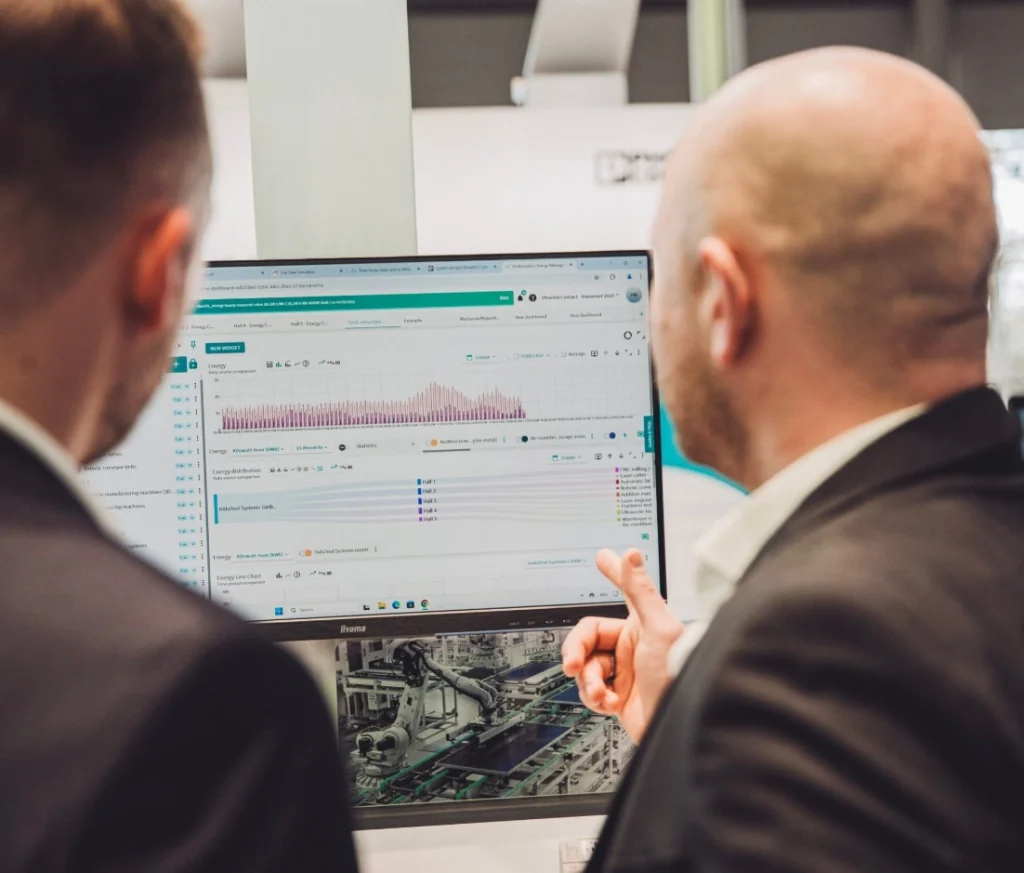
In the end it becomes clear that a continuous energy data flow is far more than a technical necessity, it is a real competitive advantage. When energy meters, edge devices and PLCnext Control work together seamlessly, they create transparency that directly improves efficiency, availability and cost reduction. Production companies gain not only a precise understanding of their energy flows, but also the foundation for strategic decisions, from avoiding peak loads and optimizing individual lines to developing site-wide energy strategies.
This turns energy data into measurable value and a technical data path into a key building block of modern and future-ready production.
Learn more about our solutions for a continuous energy data flow and our energy management software that can be used locally and in the cloud: Energy management in practice | Phoenix Contact

