

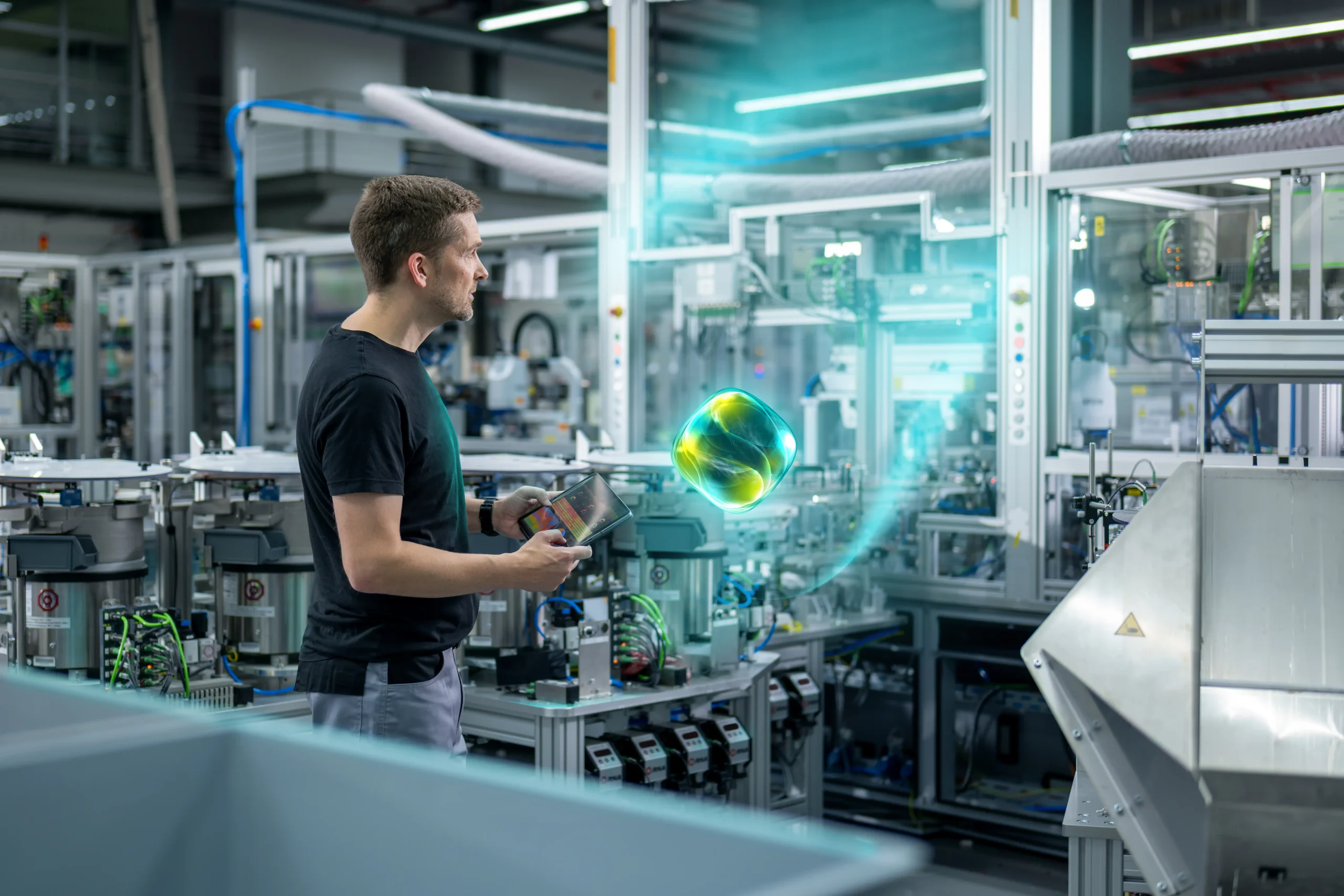
Industrial AI becomes truly valuable when machine and process data can be turned into insights that help you make better decisions.
Anomaly detection is already one important MLnext application. If you want to learn how MLnext Creation can help detect deviations in machine behavior, check out our deep dive into industrial anomaly detection. But what if the same data could also help you estimate values that cannot be measured continuously, predict how a process will develop, or automatically identify different quality conditions?
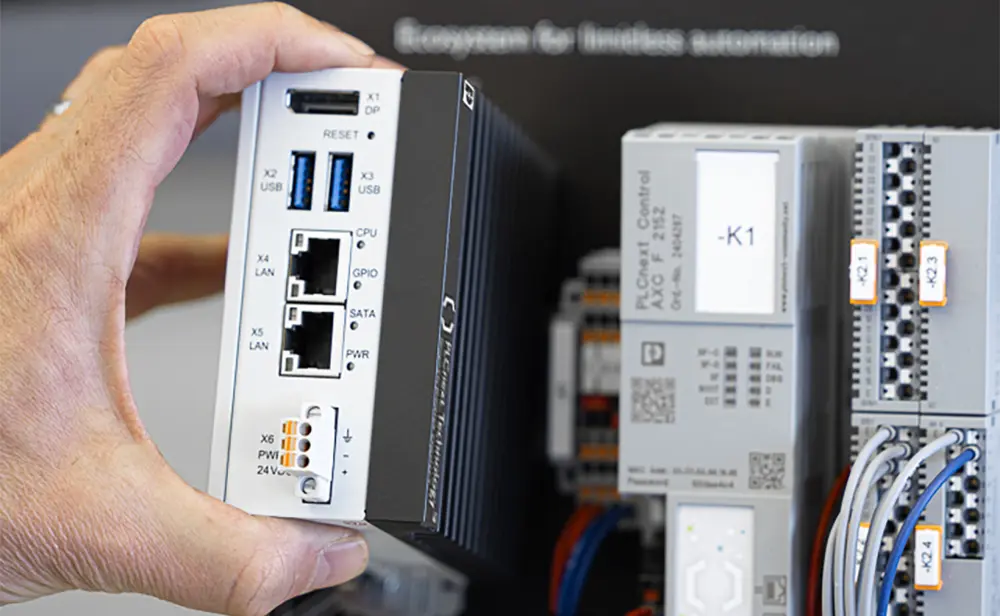
With new capabilities for regression, forecasting and classification, MLnext opens up additional possibilities for industrial machine learning, from virtual sensors and process predictions to automated quality assessment. Combined with the openness of PLCnext Technology, these capabilities can be integrated into automation applications on PLCnext Control, bringing machine learning closer to the industrial process.
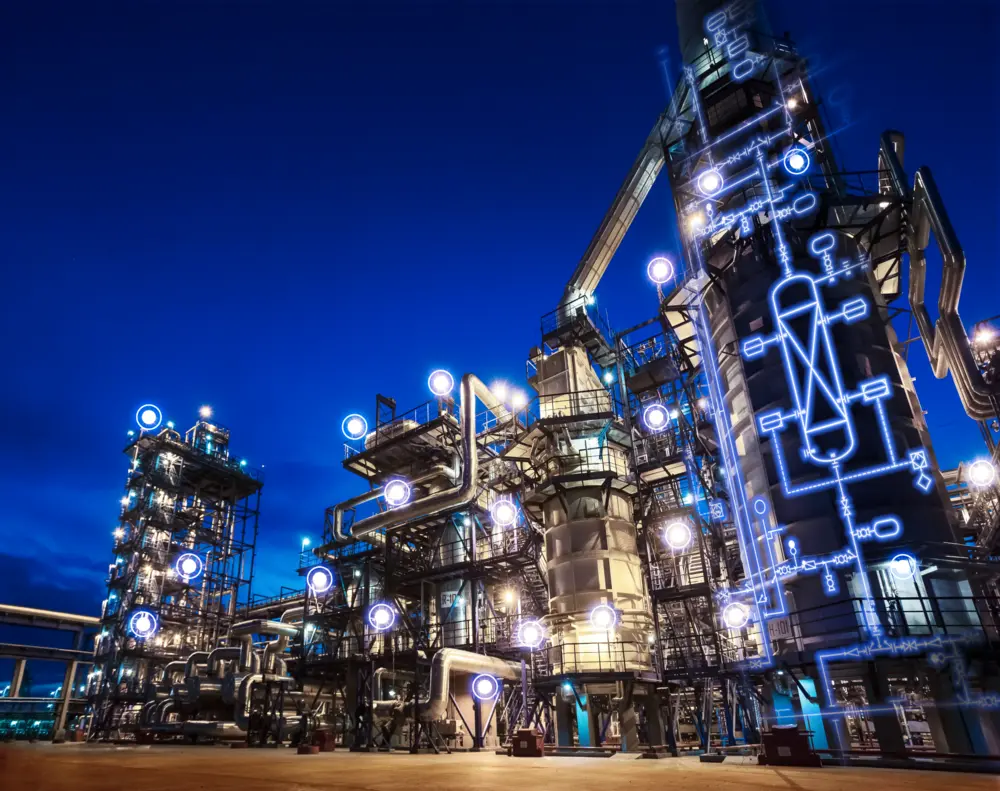
From virtual sensors to process forecasting and automated quality assessment: MLnext opens up new possibilities for data-driven industrial applications.
From industrial data to practical AI applications
MLnext is designed to make machine learning accessible to automation and domain experts without requiring data science or programming skills.
MLnext Creation supports the creation and training of machine learning models, while MLnext Execution brings these models into the industrial process environment. Both components can be used independently or combined in an end-to-end workflow.
Virtual sensors: estimate what you can’t measure continuously
A virtual sensor uses existing machine and process data to estimate a value that would otherwise not be continuously available. In food production, for example, this could be moisture, viscosity or sugar content. Historical process data combined with corresponding reference or laboratory values can be used to train a model that continuously estimates these parameters during production. The result: more process transparency without necessarily adding more physical measurement points.
Want to see how this works in a real automation application? At ARAUCO, a machine learning-based virtual sensor estimates a critical process value in real time, while PLCnext Control connects the ML model with the existing control environment. Read the full ARAUCO use case here.
Forecast what happens next
Knowing the current state of a process is useful. Knowing where it is heading can be even more valuable. Forecasting models analyze time-series data to predict future developments, such as temperature curves, energy consumption or load profiles.
Consider a thermal process such as an oven or heat-treatment system. Instead of reacting only when the temperature leaves its target range, a forecasting model can predict the upcoming temperature curve. The control system can use this information to react earlier and stabilize the process, helping to reduce scrap and use energy more efficiently. Instead of reacting to what has already happened, you can start acting on what is likely to happen next.
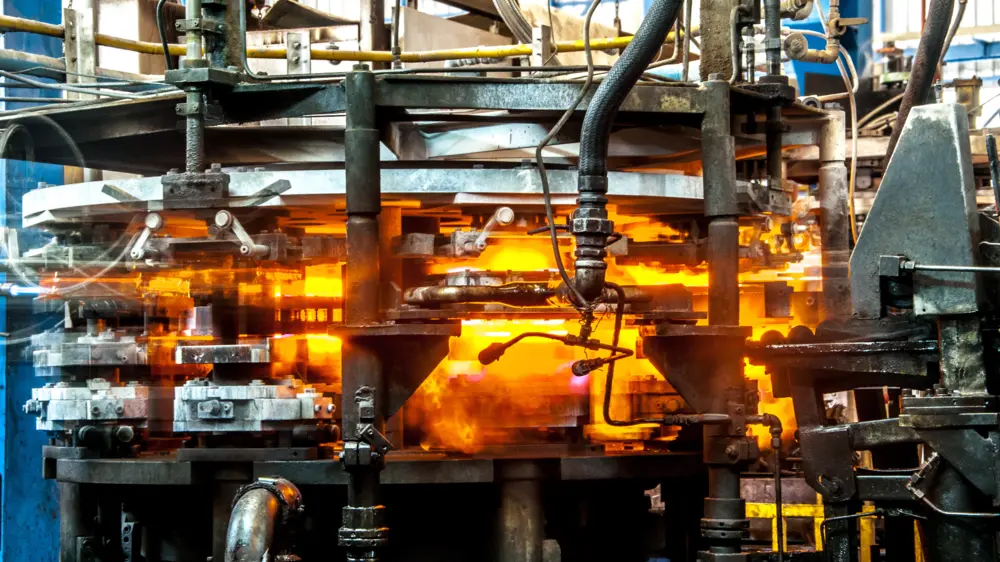
Forecasting models can predict temperature trends in thermal processes, enabling earlier intervention and more stable process control.
Turn process data into quality insights
Machine learning can also help answer another important production question: What kind of condition or quality deviation are we looking at?
Classification models assign operating states, events or product characteristics to predefined categories. In electronics production, for example, process data could be used to distinguish between different quality or defect classes, rather than simply classifying a component as good or bad.
This can make deviations visible earlier and give experts additional information for root-cause analysis and process optimization.
Connect AI with your automation
Creating a machine learning model is only part of the story. The real value emerges when AI becomes part of the automation process.
This is where the openness of PLCnext Technology becomes particularly valuable. Models created with MLnext Creation can be deployed with MLnext Execution and integrated into automation applications on PLCnext Control. Process data from the machine can be used by the model, while resulting predictions, classifications or estimated values can be made available to the automation process via OPC UA.
This creates a direct connection between machine data, AI and control. Instead of operating AI as an isolated application, machine learning becomes part of the industrial automation architecture.
MLnext Execution can also collect new process data while executing the model. This data can be used to further develop or retrain models in MLnext Creation, helping models evolve as process conditions change.
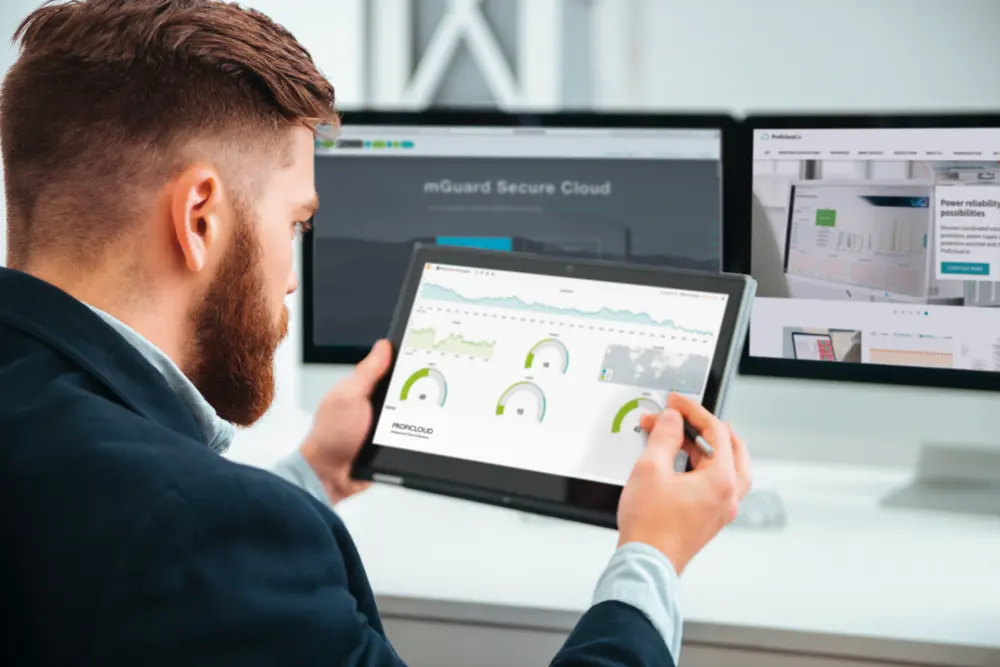
MLnext Creation and MLnext Execution support an end-to-end workflow for creating, deploying and running machine-learning models in industrial applications.
Good AI starts with good data
There is one thing even the best machine learning tool cannot replace: good data. Reliable models depend not only on the amount of historical data available, but also on its quality and relevance. Missing, inconsistent or incorrect data directly affects model performance. Different applications also require different reference data: virtual sensors need reliable target values, forecasting requires relevant time-series data, and classification depends on clearly defined classes.
That is why successful industrial AI projects often starts long before the first model is trained: by understanding the process and the data behind it.
From anomaly detection to industrial AI
With virtual sensor, forecasting and classification, MLnext extends industrial machine learning beyond anomaly detection and supports a broader range of applications:
- Detect unusual machine behavior
- Estimate values that are difficult to measure continuously
- Predict how processes will develop
- Classify quality and operating conditions
The openness of PLCnext Technology makes it possible to bring these machine learning capabilities into industrial automation. Running and integrating ML models on PLCnext Control connects process data with AI-generated insights, making the results available where they can create real value: directly in the automation process.
Ready to explore what MLnext can do?
Whether you want to start with anomaly detection, create a virtual sensor, predict process behavior or explore automated quality assessment, MLnext provides a practical way to bring machine learning closer to your industrial application.

