



From photovoltaic energy to intelligent energy management with PLCnext Technology

The De Hoop Pekso precast concrete plant in the Netherlands combines industrial production with on-site photovoltaic generation.
As industrial companies move away from fossil fuels and electrify more of their processes, energy management becomes increasingly complex. Renewable generation, rapidly changing loads, storage systems, charging infrastructure, and strict grid limits all need to be coordinated in real time.
The precast concrete plant De Hoop Pekso in the Netherlands shows what this means in practice. To reduce its dependence on fossil fuels, the company installed a 640 kWp photovoltaic system and introduced electrical heating as an alternative to the gas normally used in the concrete curing process. But generating renewable energy was only part of the challenge. The energy also had to be used efficiently without exceeding the limits of the local electricity grid.
The challenge: Balancing generation and rapidly changing loads
The plant has a highly volatile energy profile during operating hours. Cranes and welding equipment can create short load peaks of up to approximately 250 kW above the base consumption. At the same time, the photovoltaic system continuously changes the amount of energy drawn from the grid.
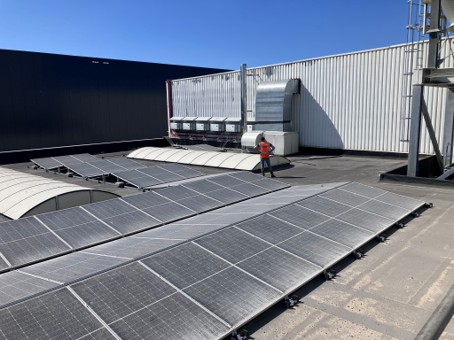
The 640 kWp photovoltaic system supplies renewable energy for production and the electrically powered concrete curing process.
The 24 electrical heating elements used for the curing process add another challenge. Together, they can provide up to 720 kW of heating power, with individual switching steps of around 30 kW. Switching them on without sufficient photovoltaic generation can increase grid consumption significantly. Switching them off when the plant is operating close to zero grid consumption can have the opposite effect and feed unwanted photovoltaic surplus into the grid.
The result is a dynamic energy system that cannot be managed through simple monitoring alone. It requires fast data acquisition, intelligent control, and reliable communication between devices from different manufacturers.
The solution: PLCnext Control at the heart of the system
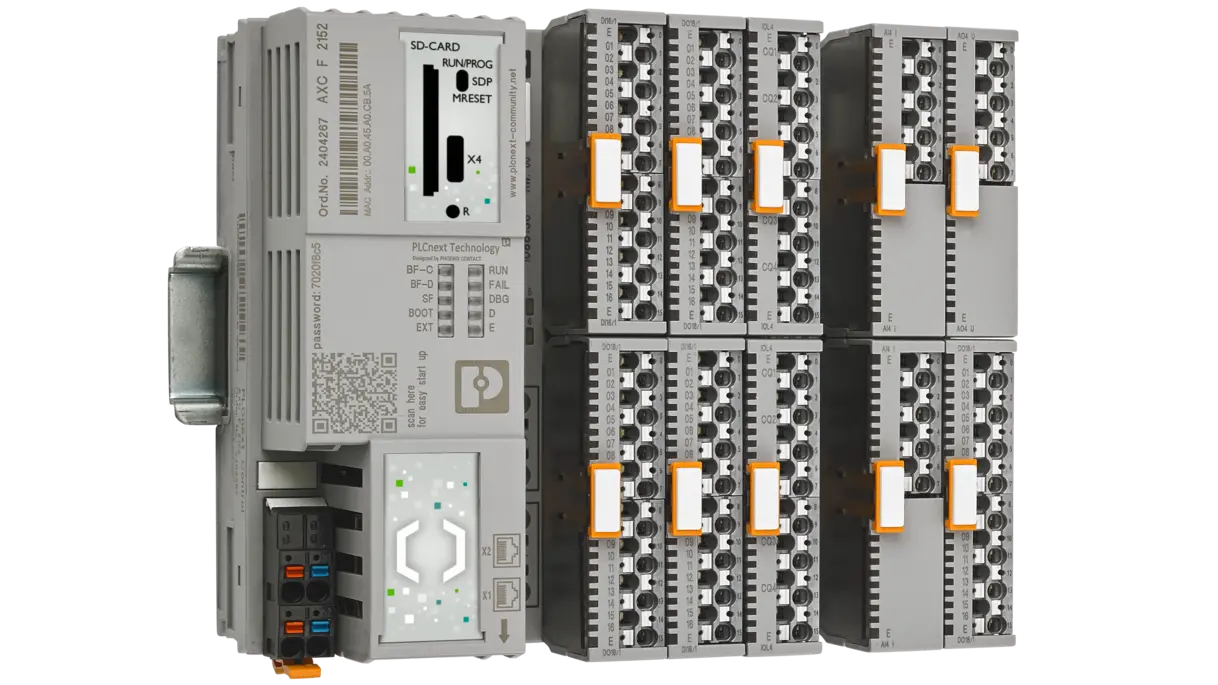
This is where PLCnext Technology comes into play. An AXC F 2152 PLCnext Control connects the relevant components and provides the local control required to react to changing energy conditions. The system communicates with devices via Modbus TCP and Modbus RTU and integrates energy and operational data into the overall energy management solution.
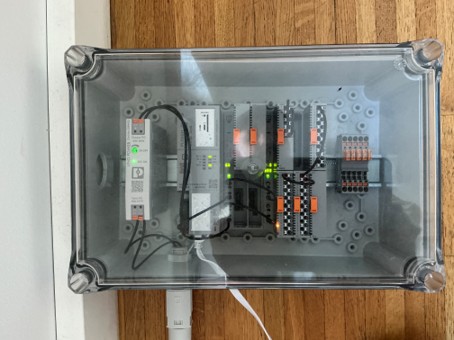
An AXC F 2152 PLCnext Control connects the energy assets and enables fast local control in response to changing conditions.
The controller runs the energy management software with 100 ms cycles. Together with the response times of the connected power meter and photovoltaic inverters, the system achieves a combined reaction time of approximately one to two seconds. This is fast enough to respond to short peaks while keeping operation within the applicable grid requirements.
The openness of PLCnext Technology is particularly important in an application like this. Different field devices, energy meters, inverters, heating systems, and communication technologies can be integrated, while the automation system can be extended as requirements evolve.
Using photovoltaic energy where it creates the most value
The first priority is to use the generated photovoltaic energy directly for the machines in the factory. Surplus energy can then be used for the electrical heaters in the curing chamber, replacing part of the energy that would otherwise be provided by gas. At peak times, the electrical heating system can use up to approximately 200 kW of photovoltaic power.
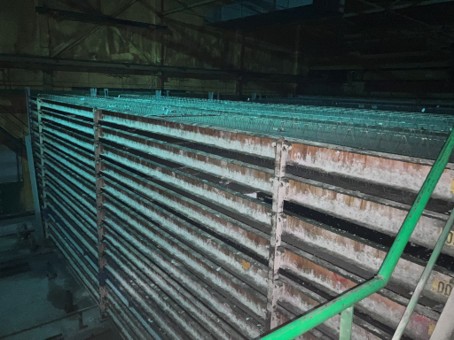
Surplus photovoltaic energy is used to power the electrical heating elements in the concrete curing chamber, reducing the need for gas.
This makes the energy management system more than a monitoring solution. By continuously evaluating generation and consumption and controlling connected assets accordingly, the system helps the plant use available renewable energy where it creates the greatest value.
From energy data to smarter decisions
The same principle extends beyond the individual control task. PLCnext Control can collect operational data, exchange information via industrial communication protocols such as Modbus and MQTT, and connect the field level with a cloud-based energy management platform. In the broader solution developed by Ivor Jüchtern, PLCnext Control devices are already used across multiple customer installations.
The resulting transparency makes it possible to continuously assess generation, consumption, and available flexibility. This provides the foundation for applications such as:
- peak load management,
- energy performance monitoring,
- analysis of historical operating data,
- integration of live and forecast weather data,
- and improved detection of unusual operating conditions.
A scalable approach to industrial energy management
The application shows how open automation can support the transition toward more flexible industrial energy systems.
Rather than treating photovoltaic generation, machines, heating systems, grid limits, and energy data as separate topics, they become part of one connected system. PLCnext Technology provides an open automation layer that connects heterogeneous devices, processes data close to the application, and enables local control while also exchanging information with higher-level energy management systems.
This approach is not limited to a single concrete plant. Similar architectures can support industrial energy hubs and other applications where generation, consumption, storage, and flexible loads need to be coordinated.
As industrial processes continue to electrify, the ability to connect operational technology with intelligent energy management will become increasingly important. The example at De Hoop Pekso demonstrates how open automation can help industrial companies coordinate renewable generation, dynamic loads and production processes in real time.

